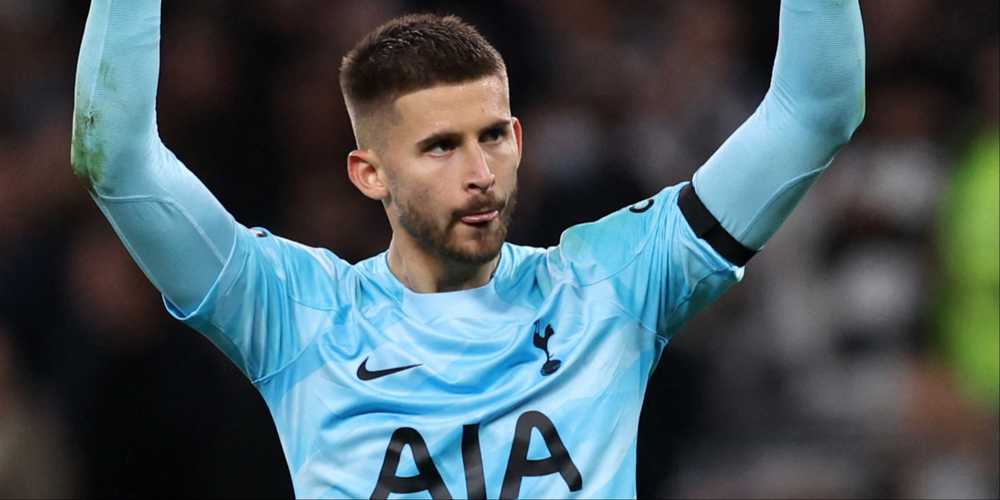
The Premier League has faced heavy criticism online after posting a light-hearted clip featuring Guglielmo Vicario — a move many fans believed went too far.
During Tottenham’s match against Fulham on Sunday, Vicario tried to send a long ball upfield, but the attempt misfired. He overhit the pass, and the ball travelled well beyond its target before bouncing out of play. While it was hardly a major blunder, the moment quickly attracted attention.
Soon after, the league’s official social media account uploaded footage of the incident. The caption read, “Just how the play was drawn up…” followed by “whoops” and a laughing emoji as the camera cut back to Vicario’s reaction. Although clearly intended as humour, a number of supporters — especially Tottenham fans — were unimpressed.
Many took to X to express their frustration, arguing that the league’s official account should remain neutral rather than appear to mock an individual player. One Spurs fan suggested the club or the goalkeeper’s representatives might need to respond, questioning whether the post was appropriate for an organisation of that stature. Another labelled it “disgraceful,” stunned that such content came from the league itself.
The criticism extended beyond Tottenham’s fanbase. Several neutral observers also condemned the post, with one calling it “bullying and trolling.” That commenter suggested it unfairly targeted a player who could already be struggling with confidence and argued that whoever approved the upload should reconsider their judgement — even hinting at possible disciplinary action. From that perspective, if the content had managerial approval, it raised concerns about professionalism within the league’s media team.
The incident underlines the fine line sports bodies must tread online. As leagues increasingly adopt a meme-driven, playful tone to connect with younger audiences, debate continues over how far that approach should go — particularly when it centres on individual mistakes. While fans often engage in banter, some believe official accounts should avoid amplifying errors for entertainment.
As backlash intensified, the Premier League deleted the post. Though no formal statement followed, the removal appeared to acknowledge the negative reaction and bring the matter to a close.
Ultimately, what was likely meant as harmless humour quickly spiralled into controversy, serving as another example of how easily social media posts can provoke strong reactions in modern football.