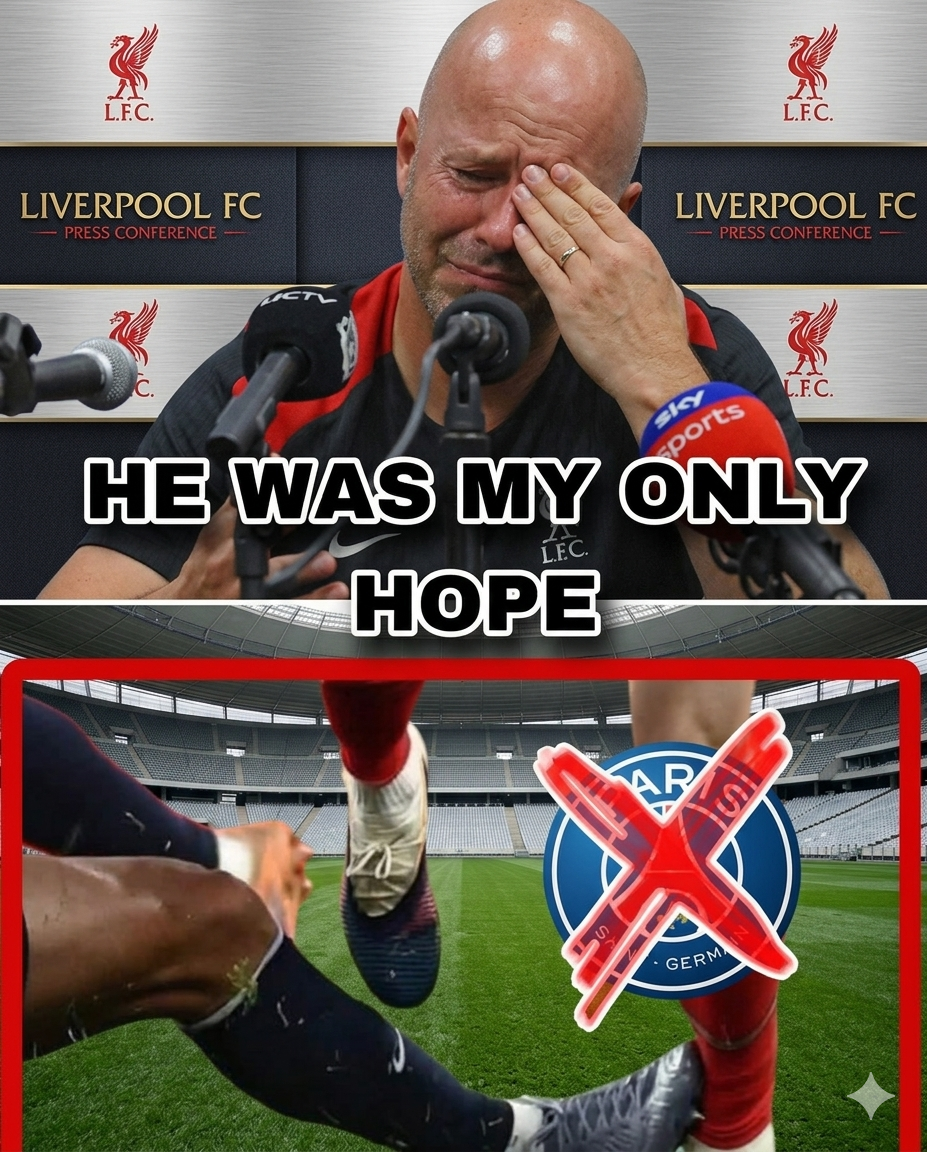
The first images of Hugo Ekitike left fans heartbroken as they watched him suffer a serious injury. Ekitike later shared an emotional message about his condition, leaving supporters around the world praying for his recovery.
In that moment, football stopped feeling like just a game.
What began as a routine sprint quickly turned into something far more painful and unexpected. There was no harsh tackle or dramatic collision—just a sudden twist, a wrong step, and then collapse.
The diagnosis arrived swiftly and brutally:
One of the most dreaded injuries in modern football.
An injury that doesn’t only sideline a player, but threatens the very core of what makes him who he is—his pace, explosiveness, confidence, and trust in his own body.
“I don’t know if I can still call this my career anymore…”
That line turned from a private thought into a moment that echoed across the football world.
“When I heard those two words… everything went silent.”
“Achilles tendon rupture. My mind just stopped.”
He described the moment not simply as pain, but as something deeper—an internal break even before medical confirmation. A feeling like something snapped inside him, telling him everything had changed instantly.
But that was only the beginning.
After initial treatment, Ekitike was placed under Liverpool’s medical care at the AXA Training Centre, where his rehabilitation journey now begins.
A place built for recovery—but also a place where time feels painfully slow.
“The hardest part wasn’t the surgery… it was what came after.”
Doctors confirmed what every footballer fears: an Achilles rupture is not a short-term setback. It demands months of recovery, sometimes more than a year, and even then, there is no guarantee a player returns the same.
That uncertainty became heavier than the injury itself.
“I’m not afraid of the pain anymore… I’m afraid of the silence that follows.”
Inside the rehabilitation centre, football life fades into the background. Pitches are replaced by treatment rooms, stadium noise by medical instructions, and matches by recovery routines. In that silence, doubt grows louder.
“I looked at myself and asked… am I still that player?”
Because for a 23-year-old still shaping his career, the injury is not just physical—it shakes identity. The speed, the sharp turns, the explosive runs—all suddenly feel uncertain.
“People say I’ll come back… but no one can promise I’ll be the same.”
That reality weighs heavier than any scan or diagnosis.
“I’m not asking to be rushed… I just want to be understood.”
His message is not about sympathy, but acceptance of a difficult truth: football moves on, even when a player is forced to stop.
Now, under strict rehabilitation programs, every movement is measured, every step controlled, and every day carefully planned. But beyond the physical recovery lies the hardest battle—the mental one.
“I just want to play football again…”
A simple sentence, but one filled with emotion and uncertainty.
As the news spread, fans, teammates, and the wider football community reacted with shock and support, revisiting the moment he went down and sending messages of encouragement.
But inside the AXA Training Centre, there are no headlines—only recovery, patience, and time.
And so the world waits.
Not just for a return date.
But for the return of a player trying to rediscover himself after an injury that changed everything.
Because in football, sometimes the toughest battle isn’t against an opponent…
It’s against your own body.